


Joint pain can be found in a variety of different conditions;They not only cause discomfort to patients, but also cause serious problems related to the musculoskeletal system.
Experts note that problems of this type occur in the life of almost every second person older than 40 years, and by the time they reach 70, joint pain worries about 90% of the population.But what to do if your joints hurt?There is only one answer: immediately contact a qualified specialist who will make a diagnosis and prescribe the necessary therapy to eliminate the cause of the pain, and not just the symptoms.
Let's mention that a joint is a movable connection of the bones of the skeleton;They are present in the limbs and other parts of the body.Their movement occurs thanks to tendons and muscles.Let's take a closer look at why such pain occurs and consider how to get rid of it.
Causes of pain
Various pathological processes often occur in the joints, namely inflammation, fractures, sprains and much more.Pain can also occur due to certain illnesses, but this will be discussed a little later.Here are the main risk groups:
- Aging.People older than 40-50 years, as already mentioned, are at a much higher risk of experiencing problems of this type.This largely depends on the slowing down of metabolic processes in the joints.
- Genetic predisposition.It has been found that people whose immediate relatives suffered from arthritis, arthrosis or other diseases that manifested themselves in joint pain are much more likely to suffer from this manifestation.
- Congenital anomalies.Congenital defects can be related to the joints and cause pain or other serious illnesses for obvious reasons.
- Overweight.Being overweight puts a lot of strain on your joints.
- Excessive strain.If you are a professional athlete or your work involves regular physical strain, joint pain cannot be avoided.
The cause of such phenomena can also be problems associated with poor blood circulation in the composition shell.As a result, the regeneration process of all cartilage tissues deteriorates, which leads to the gradual destruction of the articular cartilage and even damage to the bone itself.This can also damage surrounding muscles and other joints.
A poor diet can also have a negative impact on the health of your joints.If this is the problem, a qualified specialist will prescribe you a special diet.Such a diet should be individual in nature, but in any case contains a high content of calcium, boron, silicon, as well as zinc and phosphorus.
As strange as it may seem, joint pain can occur due to a sedentary lifestyle.The fact is that without a sufficient number of movements, the production of synovial fluid decreases, metabolic processes are seriously disrupted and, as a result, the joints begin to hurt.
Pay attention!In the vast majority of situations, all of the risk groups and causes described above only represent additional problems, and the actual reason for the occurrence of pain itself lies precisely in the development of a specific disease.Let's look at the main diseases that can underlie such disorders.
What diseases can cause joint pain?
Here you will find a list of the most common complaints.
arthritis
Everyone has probably heard of this disease, because arthritis is a collective term that includes all diseases that can cause pain in the joints.The disease can develop in different ways, so either one joint or several joints are affected at the same time.The following symptoms indicate arthritis:
- Significant increase in body temperature;
- The appearance of swelling of the surrounding tissues;
- The appearance of a feeling of heaviness during movements.
gout
Gout is a chronic disease characterized by disorders of purine metabolism.When this inflammatory process relapses (exacerbations), neighboring joints are also affected; after a certain time, the entire body can even be affected by the disease.The pain of gout is sharp and intense.
Osteoarthritis
This joint disease is also very common.The essence of this disease is that in older people, the elastic cartilage, which is supposed to protect the joint, begins to harden, thereby losing its elasticity and wearing out.As a result, the tendons and ligaments begin to stretch and severe pain occurs.Basically, all joints can be affected by the disease, from the fingers to the shoulders and spine.To eliminate this pathological process, consult a doctor, lose weight and, if possible, reduce the load on the inflamed joint.This pathology has the following characteristic symptoms:
- Increased sensitivity of the affected area;
- The appearance of “bumps” on the bones.
Osteoarthritis
Osteoarthritis is another common condition that can cause joint pain.Such a disorder is usually classified as a degenerative-dystrophic pathology affecting the cartilage tissue.Osteoarthritis is only observed in large joints, namely the hip, knee, but also the upper arm or ankle.The development of this disease occurs very slowly;Over time, the patient notices a slight crunch and periodic pain in the joint.At the same time, microcracks appear in the cartilage, its surface becomes rough, eventually it is completely destroyed, the joint loses mobility and becomes stiff.
Bursitis
This disease is in many ways similar to arthritis, but an experienced specialist will never confuse it.Bursitis is an inflammatory process that is localized in the synovial bursa, i.e. in the bursa.
Bursitis can be caused by an injury.It is always accompanied by the following symptoms:
- Severe stiffness of movement;
- Constant pain in the joints.
osteoporosis
Osteoporosis is a chronic progressive metabolic disease characterized by a significant decrease in average bone density.Women often suffer from osteoporosis after menopause.Joint pain is one of its main symptoms.
Pay attention!You shouldn't try to diagnose yourself;Contact a qualified specialist who will not only examine you and listen to you, but also prescribe the necessary diagnostic tests.
This makes it possible to quickly and competently make a diagnosis and thus prescribe treatment.If you try to identify the problem yourself and start self-medication, the risk of making mistakes is extremely high and, therefore, you will only worsen the condition of your joints and waste valuable time, which will significantly complicate the treatment process in the future.
diagnosis
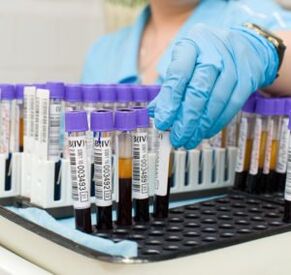
As already mentioned, in order to determine the causes of joint pain, it is imperative to contact a specialist.
An examination of the body can be entrusted to a therapist, orthopedist, as well as a traumatologist, surgeon or rheumatologist.If another doctor treats the disease you have been diagnosed with, you will simply be referred to them.
The following laboratory and instrumental research is carried out (the specialist selects only the most necessary of them based on consultations, as well as, if necessary, already completed diagnostic procedures):
- General and biochemical blood tests;
- Immunological examination;
- Conducting an antistreptolysin test;
- X-ray with or without contrast agent, no;
- Computed or even magnetic resonance imaging;
- Taking a sample of synovial fluid;
- biopsy and so on.
You must provide your doctor with information about your medical condition and the existence of any other chronic or infectious diseases.They mention everything that can be associated with pain in the joints.In this way you will significantly speed up the diagnostic process.
Treatment
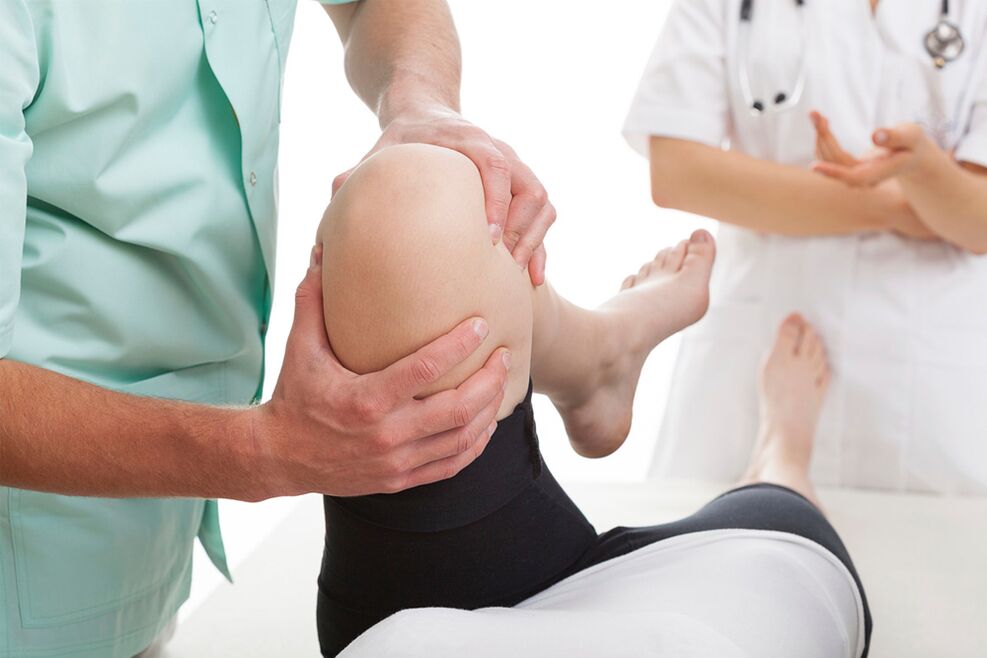
As already mentioned, when pain occurs, it is important to resort to complex treatment, that is, it is necessary to eliminate not only the pain itself, but also the root cause of this symptom.For this reason, the treatment process is different for each disease.Here are the basic rules that doctors recommend for almost all diseases of this type (consult a specialist about compliance, since each disease is individual):
- Use a gentle treatment.If the pain in the joints becomes very severe, you can repair the damaged joint with ordinary bandages, in some cases even a plaster cast is used if everything is so serious.
- Apply ice to injuries.If a joint is damaged due to an injury, be sure to put ice on it until you contact a traumatologist.However, in no case should you use this advice for illnesses, as this can only aggravate the process.If you don't have ice, you can use something else, such as a container of cold water.
- Use nonsteroidal anti-inflammatory drugs (NSAIDs).Medications of this type can help to significantly relieve joint pain, but they should only be used for a short period of time, otherwise side effects may occur.It should also only be used on the recommendation of a specialist, otherwise everything can lead to the same side effects.Drugs of this type affect the inflammatory process and the resulting swelling.These medications can come in the form of injections, tablets, or ointments.All nonsteroidal anti-inflammatory drugs have their own contraindications that should never be ignored;Read the instructions carefully!
- Use chondroprotectors if necessary.Almost all chondroprotectors are very effective for joint diseases, especially if you start taking them at the initial stage of the development of the disease and in combination with other drugs, the list of which depends on the specific disease.In no case should you save on your health, even if chondroprotectors are quite expensive, take them if necessary!
- Use folk remedies to relieve symptoms.There are many controversies and different points of view regarding the use of folk remedies in the treatment of diseases and disorders.In fact, the use of folk remedies can even make sense, but only in consultation with the attending physician and as part of complex therapy.
Important!Unfortunately, not all diseases can be cured well with conservative means.Sometimes serious surgery may be necessary, but doctors only perform it when there are simply no other options.
However, you should not refuse or delay surgical intervention, as the disease may progress and therefore it will become much more difficult to get rid of it.
The use of folk remedies
Let's look at the process of applying some of the most commonly used folk remedies:
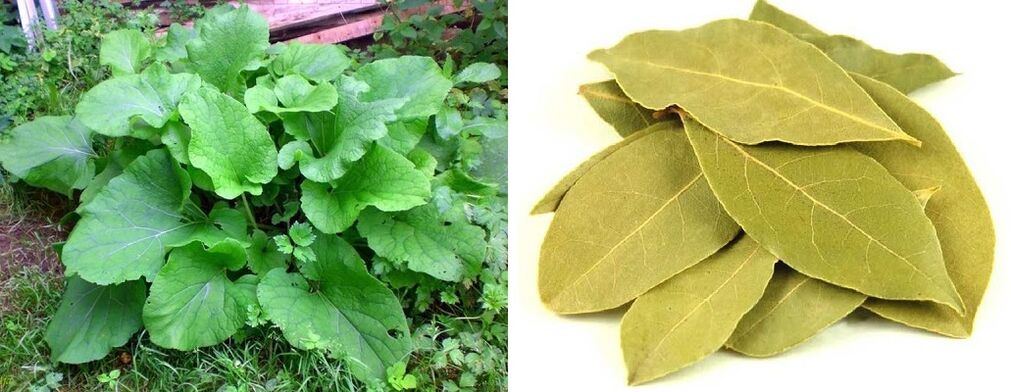
- Tincture of burdock leaves.Freshly picked burdock leaves must be chopped in a meat grinder and poured with alcohol, then left for a week.This tincture can be used both as a rub and as a compress;it can relieve pain in many cases.
- Soda baths.Such baths help with problems with the hands or fingers.Simply add baking soda to warm water.This relieves pain and discomfort and slightly reduces the inflammatory process.
- Compress made from bay leaf decoction.This folk remedy is great for problems related to the hip joint.Take eight bay leaves and pour 200 ml of plain water over them, bring to a boil and wait 5 minutes.Then remove the future compress from the heat and wait until it cools down.Now you can moisten a piece of gauze in this broth and apply it to the joints.
Pay attention!As you can imagine, such folk remedies will not help you combat the cause of joint pain, which is why it is forbidden to use folk remedies as the main method of treatment.
Not all of these remedies are effective enough to relieve symptoms.Therefore, it is important to discuss the possibility of their use with a specialist.
In addition to taking medications and folk remedies during the treatment process, it is important to adjust your lifestyle.You first need to normalize your sleep and spend a lot of time resting.If possible, you should avoid sedentary activities and move more, this will minimize pain, but you should not put critical and unusual loads on your joints.Start swimming and it should not be considered a professional sport;Swim to keep your body in shape.
Preventive measures

Preventive measures are about following the simplest rules, but they can significantly help and prevent joint problems.Experts recommend starting to exercise, but it doesn't have to be professional sports, it's important to just start moving more.Even half-hour classes held two to three times a week can show excellent results.
Preventive measures are closely related to dietary rules;It is necessary to consume only foods that contain useful microelements, macroelements, as well as proteins and vitamins.
If you already feel unpleasant sensations in the joint area, you should immediately contact a qualified specialist who will help you identify and eliminate the problem.